Thursday, January 07, 2010

Blogging

I'm now in Melbourne, jobless and enjoying every moment of the housewife lifestyle. Laundry, dishes, cooking, surfing, reading and studying. The missing element from my daily routine is tidying up after toddlers, which I actually do occasionally when we visit Jean’s cousin and his kids.

Tomorrow, I start work at a marketing company selling credit cards and financial products. I do not expect to do very well, but the sales training will be a good eye opener to a different world.

The internet connection is strangely slow. After being used to the blazing connection speeds in china (its so bloody fast because just about anything interesting is blocked by the government), this is quite agonising. 480 kb/s is simply unacceptable.

I've had a slow epiphany over the duration of the past week:
In motor sports and the auto industry, wheel slip is an important term in determining how much friction the tyres and road are generating.

A commonly accepted approach is that the tyre produces maximum friction when it is slipping a little (usually to the order of 5%). Roughly speaking, a car travelling at 100 km/h and accelerating heavily will have its driving wheels spinning at 105 km/h.

However, it is not necessary that the tyre surface actually slips against the road surface. This is because the measured speed of the tyre is actually measured at the wheel’s shaft. The tyre’s surface will move at 105km/h (as in example above), but the portion of tyre contacting the road will be moving at 100 km/h.

This can be understood by considering the tyre surface alone. The tyre surface spins around the shaft at 105 km/h, but at the area where the surface touches the ground, the surface speed slows down to 100 km/h. This is possible because the tyre surface is elastic, and can compress a little. The rubber at the surface will be moving at 105 km/h, then when it nears the contact area it sort of bunches up a bit and slows down to 100 km/h. Once past the contact area, the rubber loosens up again and speeds up to 105 km/h.

This action of bunching up is reasonable, when you consider the elasticity of the material. The bunched up material is under compression, and will help transfer force from the hub to the contact patch.

Sleep now, work starts tomorrow.

Labels:

Thursday, November 05, 2009

Sabrina is nuts

On twitter this morning:

Yee Wei:
The 3 ladies in accounting are talking about diapers, their's kids' (in)ability to hold their bladders overnight and the cost of diapers.

Sabrina:
Dude you go talk to them bout anal sex! Just to get a reaction! GO! GO! GO!

Labels: ,

Wednesday, November 04, 2009

The Knife of Legends

The Kinmen knife was the star of my uncle's knife block. Made from used artillery shell1, its very hard blade was able to hold a sharper edge compared to softer metals. The blade is made of metal folded and pounded many times like puff pastry, giving wavy lines on the side of the blade where the layer boundaries show through.

The knife is alive; it calls out to be used. It wants, desires, to cut and dice things into neat regular sized pieces2. It can plant strange ideas in one's mind.

"That juicy melon probably needs to be cubed."

I heave the large juice laden melon onto the chopping board and quickly slide the pointed end of the blade into the fruit. The hard steel meets no resistance and spreads the fruit's flesh easily, sliding against the soft moist interior tissue as easily as a well lubricated shaft in a jackhammer. The fruit was of exceptional quality, and a thick sweet liquid began to ooze onto the chopping board.


***


Kinmen is a Taiwanese island located between The People's Republic of China (often simply referred to as China) and the Republic of China (also known as Taiwan). It is a widely known fact that Taiwan, unlike China, is not a republic of the people.

The location of Kinmen makes it a location of military importance, thus drawing it much attention over the course of the two Chinas' colourful history. In the late 50s, China made a move attempting to take Taiwanese islands Kinmen and Matsu into its loving arms. After a 6-week bout of intense artillery shelling on the island, the campaign came to a stalemate as the United States and Soviet Union intervened. This intervention did not stop the fiasco in its entirety- the whole thing turned into a 20-year propaganda campaign.

The propaganda campaign in question consists of each China stuffing artillery shells with propaganda leaflets (instead of explosives) and lovingly delivering said shells to the other China. Conveniently, the game settled into a quasi-happy equilibrium where each bombards the other on alternate days. This mind numbing process lasted for 20 years.

When all this ended in 1979, some 450,000 artillery shells have accumulated on the island of Kinmen. This made the island a fairytale mine from which processed high quality steel can be picked from the ground. Artisans and craftsmen collect the material and fashion them into various tools and objects, with kitchen knives being the most notable.

Notes:
1 Intact artillery shell, only used once with no explosives, lady owner. Good condition, must see to believe. Makes 50 knives. RM 200 neg.
2 This supposed phenomenon of a knife having wants may be the result of the author projecting his/her desires onto an inanimate object.

Labels: ,

Thursday, October 29, 2009

Should you replace your car with a newer model with lower fuel consumption?

Contents
1. Introduction
2. Method of analysis

Choice of test cases
Valuation of cases
Cost function
Optimum solution
3. Sample problem
Available options
Cost functions
Solution method
Choosing a non-optimum choice


Introduction

Advancements in automotive power plants have produced cars with ever improving fuel efficiency. In some instances, it may be a better choice to trade in an old fuel guzzler for a newer vehicle. Other times, it may not be a financially sound move. This paper will show how some variables will affect the decision making process.

Method of analysis

Choice of test cases

The available set of test cases is preselected by the user to account for personal preferences. For example, a user may choose to consider buying a Honda Accord, a Nissan Cefiro, or stay with the current vehicle. While there are numerous other choices available in the market, these are may not be included in the test because the user deems these unfit for consideration, based on price and preference.


Valuation of cases

Each case is valued based on purchase price and fuel consumption. Depreciation/resale value is not considered as this is not easy to predict for people unfamiliar with the used-car market. Cost of maintenance and repairs is also not considered as reliable records are difficult to obtain.

Valuation is performed on a cost per month basis, where the costs consist of:
Fuel- dependent on expected driving distance in a month, fuel consumption of the car and cost of fuel
Opportunity cost (lost of potential investment income)- dependent on money invested in obtaining a new car (after accounting for the resale price of the current vehicle) and the expected rate of return in the capital market

Cases are compared on basis of cost, and the case which presents the least cost is the optimum choice.


Cost function

The cost of fuel is the product of distance driven per month, the quantity of fuel used per km, and the price of fuel.

Z = dηp + c[(1+i)1/12 - 1]

Where:
Z is the total cost per month
d is the expected distance driven in a month
η is the fuel consumption per km
p is the price of fuel
c is the cost of obtaining a new car
i is the rate of return in the capital market

The term c[(1+i)1/12 - 1] indicates the returns from investing in the capital market that would be had if the money had been invested rather than being spent on the new car.


Optimum solution

The optimum solution is the choice which results in the lowest cost per mont.


Sample problem

Available options

Suppose our protagonist currently owns a Mitsubishi Pajero. He drives approximately 1500 km in a month, and a car salesperson has quoted him a resale value of $3,000 for the car. This car consumes 0.11 liters of petrol per km travelled. (Case 1)

He is considering buying a used Toyota Prius, which sells for $10,000 and has a published fuel consumption rate of 0.05 liters of petrol per km travelled. (Case 2)

Alternatively, a Honda Accord is available for $4500, and consumes 0.08 liters of petrol per km travelled. (Case 3)

The capital market rate of return, i, and the price of fuel, p, is not known.


Cost functions

Z1 = 1500×0.11p
Z2 + (10000-3000)[(1+i)1/12 - 1]
Z3 = 1500×0.08p + (4500-3000)[(1+i)1/12 - 1]
As discussed above, the cost function for each case is the cost of fuel and the lost opportunity to invest in capital markets. Case 1 does not involve opportunity cost as no additional outlays are required.


Solution method

A brute force approach will be used here, as this method allows a large number of cases to be considered. It goes without saying that a spreadsheet program will be most helpful.
The cost functions for all cases are evaluated for a set of possible values of p and i.


The series of tables show the cost of making each choice for different combinations of fuel price and market rate of return. In this solution, the optimum choice (least expensive) is Case 2 if the market rate of return is expected to be low, and Case 3 if the market rate of return i is expected to be high.


Choosing a non-optimum choice

In some cases, the user may have non-monetary preferences. For example, the protagonist may have a slight dislike for the Toyota Prius because of the perception that only hippies and tree hugging Hollywood-types will want one of these cars.

As it turns out, the Toyota Prius (case 2) was found to be least costly in situations where i is low. In such situations, choosing case 3 instead of case 2 means the user will have to spend more than absolutely necessary.

How much extra are you willing to pay to choose a non-optimal choice? If p = 1.60 and i = 5%, the cost Z2 is 149 while the cost Z3 is 198. Are you willing to pay an extra $49 per month just to escape the tree-hugging image of a Toyota Prius?

Labels: ,

Tuesday, October 27, 2009

Good grief, I am getting fat!

No more walking to work/ camera mall/ wet market/ supermarket/ train station/ dinner, a well stocked fridge at home, lots of Milo at work1 and easily accessible good food are contributing factors to this worryingly tightening waistline. Which is bad, because new pants cost money.

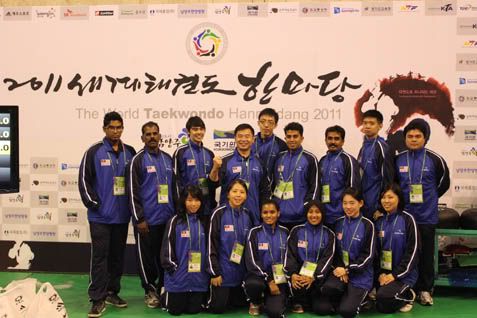
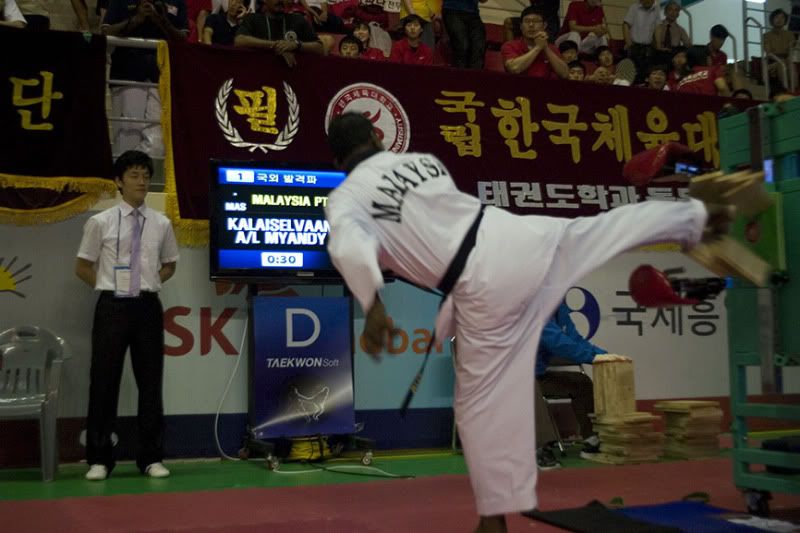
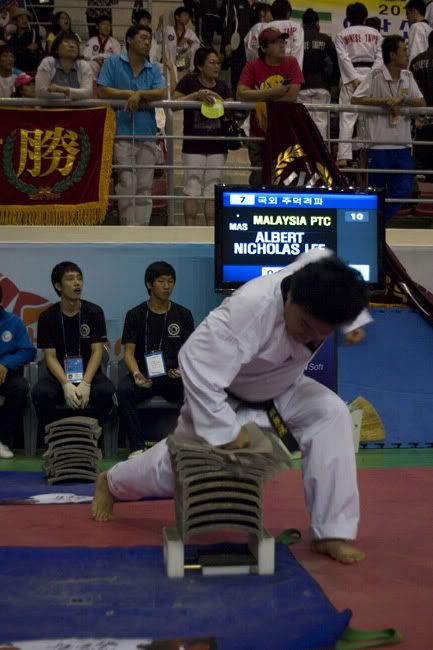
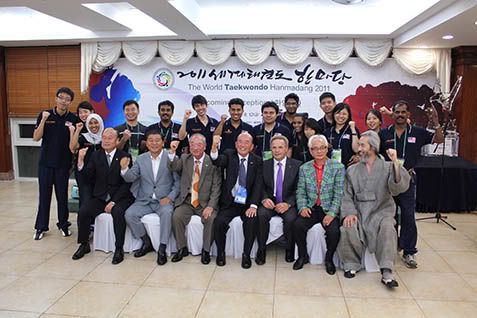
I need more physical activity than what my weekly 2 hours of prancing-about at taekwondo offers.


***


Over the weekend, I dropped by in Singapore (again). I've visited more malls in Singapore than I have in Malaysia and China combined2. As a naïve and impressionable person, I was thoroughly in awe of the variety atriums I saw. Most memorable were the 6-storey high and irregularly shaped atrium at Raffles City topped by a seemingly open-air retail space at the top level, and the squarish triple-height atrium at Marina Square was beautifully lit with numerous white coloured deep concrete beams spanning the space diffusing direct sunlight that came in through the glass roof.

On Saturday, we had brunch with 2 of my mother’s schoolday friends, and dinner with my godsister and aunt's family. As is typical for dinners at this aunt's place, it was mind blowing- this uncle is really, really into cooking. Starter was a course of carbonara linguine, followed by a salad with feta cheese and chorizo. This was then followed by a break from eating, after which was the main course. Baked cod fillet wrapped with a thin slice of bacon, served with a dollop of wasabi-tinged mashed potato and portobello mushrooms. Another short break later, we had dessert consisting of D24 durian, jam tarts and cup cakes. The entire process was lubricated with 2 bottles of white wine and talk about food.

Mind blowing indeed.


Notes:
1 I might be over exploiting the free beverages at work. I typically make a very potent cup of Neslo consisting of 4 heaped teaspoons of Milo, 1.5 heaped teaspoons of instant coffee and 1.5 heaped teaspoons of creamer.
2 Likely because most spots of interest are located in, or need to be accessed via an MRT station under a mall of some sorts.

Labels: